Many homeowners find themselves in the unfortunate situation of having no choice but to replace their garage door because their current one has been damaged beyond repair.
Many of the most common garage door models are no longer in production. One damaged panel could mean a whole new door, or even multiple doors if they need to match! Click here to see a list of common discontinued garage doors.
Visit the Homeowner Resources page for more information including troubleshooting.
These are the three most common ways that garage doors get destroyed:
Improper Opener Installation
This is the #1 cause of garage door damage, by far. There are a few things that must be done in a specific way when a garage door opener is installed or it could mangle the top of your door:
It cannot be mounted too high above the door. If it is, the opener arm will push down on the top panel as the door closes instead of driving it forward. This is extremely common with DIY opener installations since the hanging material that comes out of the box might not be long enough. When the door is open, the garage door opener rail should be no more than 4” above the top of the door.
The opener arm that attaches to the door must be at the correct angle when in the closed position. Otherwise, it will pull backwards on the top of the door instead of upwards on an angle that matches the turn in the track.
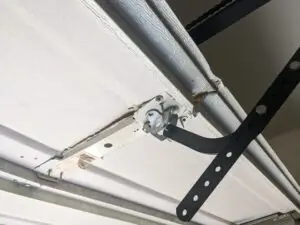
The opener arm mount should be reinforced, not screwed directly into the door.
The safety sensors should be installed to code, no more than 6” above the floor, in a place where they will prevent closing if something is under the door.
Most importantly, the “force sensitivity” must be adjusted so that the door will stop moving if it encounters unexpected resistance while both closing AND opening.
A bad opener installation is extremely sneaky. Your garage door could go for years without having any obvious problems. But eventually something will go wrong. The spring, which counterbalances the door and makes it feel light, will break one day – 100% guaranteed. It happens to every door that gets used regularly (read more here if you don’t know about broken springs). If the opener doesn’t stop pulling when it feels that the door has become dead weight, it will pull until it cracks the top of the door, damaging or destroying it.
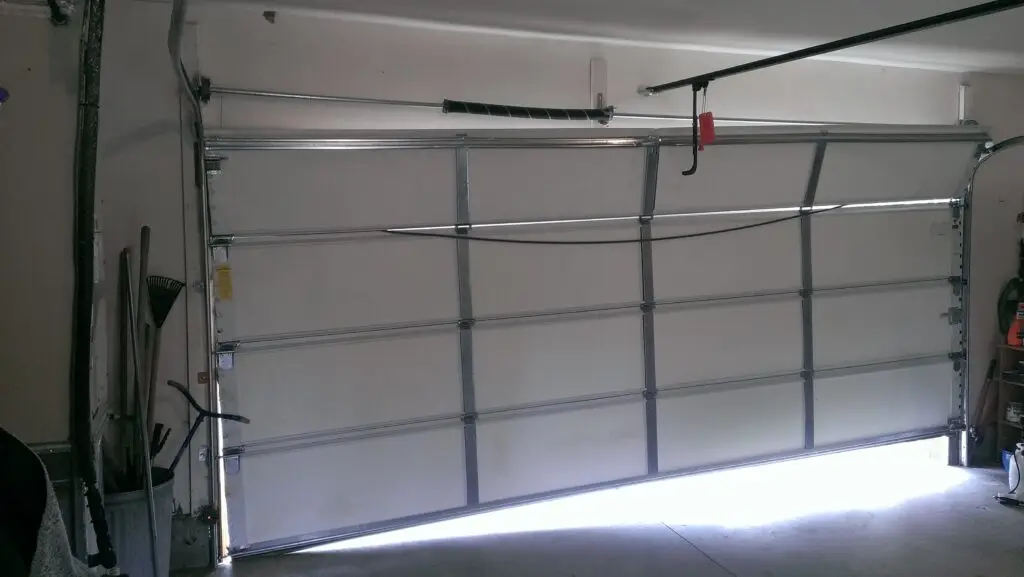
There is also the risk of the door hitting something while it is moving. Garden tools stored leaning against the track, car bumpers, kids toys, and boxes on shelves are all common culprits. If it doesn’t stop, it will jam and go crooked, the lift cables will pop off the drums, and the whole door can end up coming out of its track.
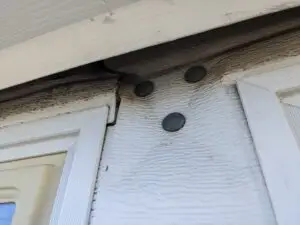
cracked top section
unreinforced opener arm mount
door hit something and went crooked because the opener kept pulling
garage door top damaged by broken spring
Flimsy Metal Doors Bend and Crack
Low quality metal doors can fall apart on their own simply through use. For the last few decades, garage doors have been a great place for home builders to cut costs with cheap products that are put up FAST by inexperienced installers.
Most new homes come with light duty doors – after all, they all look the same from the front. Several models, especially the ubiquitous Wayne Dalton 9100/9600 series, are known for the hinges pulling out. The thin metal construction means that they are difficult to reattach (but I have a secret technique for this).
Flimsy non-insulated doors also tend to bend and eventually crack in the center. This is especially common with 16’ wide doors, which are the standard for two car garages – in the open position, they aren’t strong enough to support their own weight. Every time the door opens, it flexes a tiny bit, fatiguing the metal. Once a crack starts, it does not take long for it to progress to major damage.
If you catch it early, this can usually be reinforced before it is so bad that the door is ruined. I recommend that all non-insulated doors have an additional reinforcing strut added to the second section. This is an inexpensive fix that can save you the cost of a whole new door.
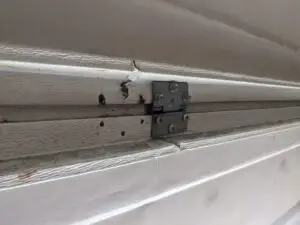
Cracked sections and a hinge that fell out and had to be moved to the side and reinstalled (Wayne Dalton 9100)
Hit by a Vehicle
This is most common in homes with extremely short driveways – people try to park too close to the door because they would otherwise leave their vehicle hanging over the sidewalk or street. There’s not much to say besides don’t feel bad if this happens to you, it is very common.
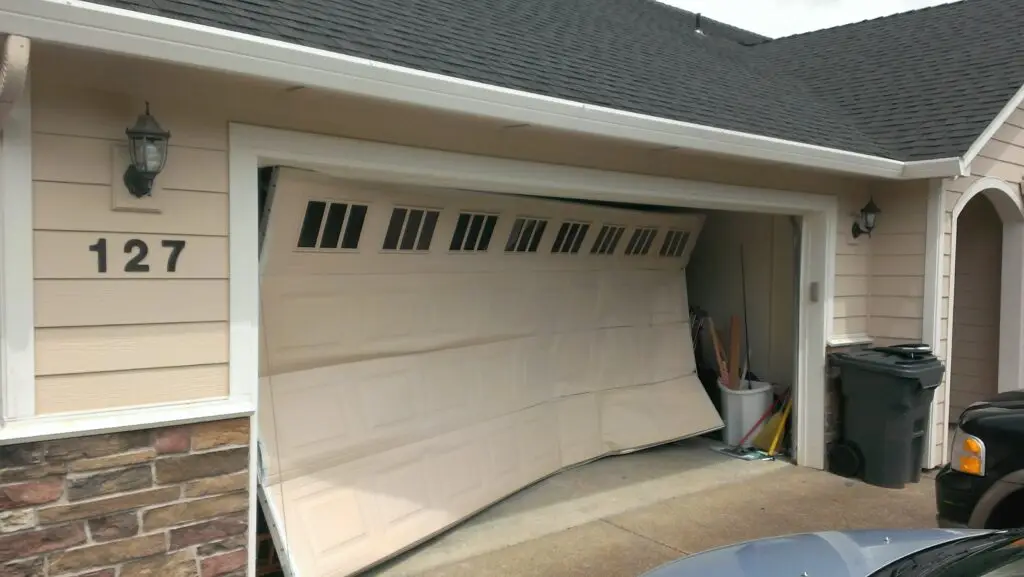
Garage door hit by a vehicle in Clackamas
We love garage doors and hate to see them needlessly destroyed. Therefore, we charge a meager $99 to do a garage door “Wellness Check”. This covers double checking the key points of your door and opener installation, lubrication, and adjusting the opener’s force settings if needed.
If you want to make sure nothing tragic happens to your garage door, contact us today!
503-545-5762
info@beezgaragedoors.com
Or, use the form below.
Contact Us
Fill out this easy contact form to get a quote, schedule a service call, if you need help troubleshooting, etc. If looking to schedule an appointment, please include your zip code or general area.